

Dr. Jiheum Park is an assistant professor of population health sciences in the Division of Health Informatics and Artificial Intelligence. She joins Weill Cornell Medicine from Columbia University, where she was an assistant professor in the Division of General Medicine.
How did you first become involved in your field?
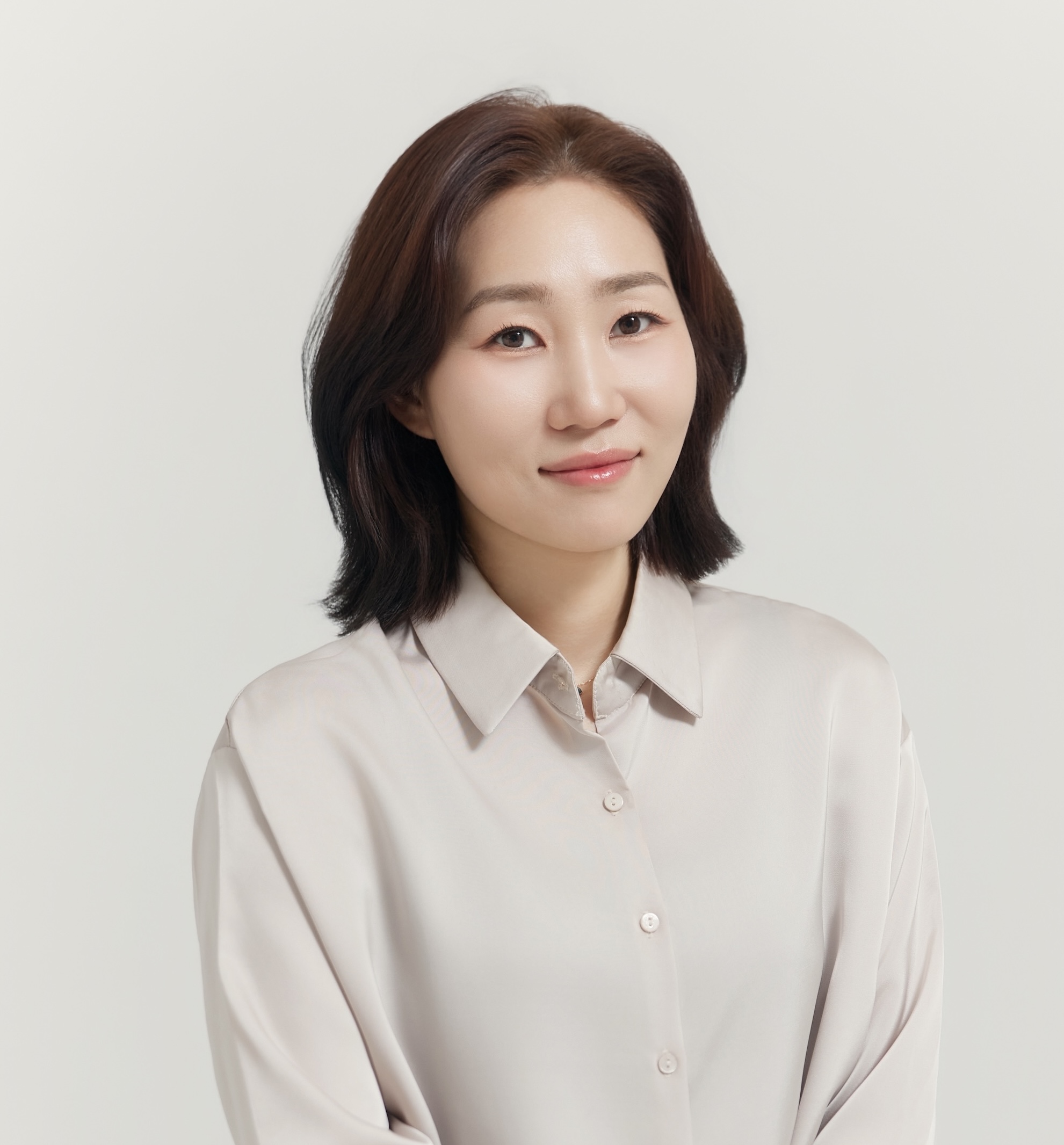
Dr. Jiheum Park
I first trained as a mechanical and biomedical engineer, designing medical devices for cardiovascular disease. Through that work, I became aware of the significant data generated by medical devices and was increasingly drawn to determining how that data could be used to both monitor disease and guide clinical decisions.
The turning point in my career occurred during my postdoctoral training, when I built machine learning models using cardiac surgery data to predict mortality and hospital readmission. Seeing those models capture complex risk patterns showed me how flexible, data-driven approaches could complement traditional statistical methods. It also pushed me to move beyond working with structured clinical registries into working with electronic health records (EHRs), where the data are often messier and larger in scale, but where the potential impact may be even greater.
Shifting from engaging with a single device or procedure to the full longitudinal patient record has transformed my career. My research today focuses on building trustworthy artificial intelligence (AI) systems that learn from large-scale EHR data while preserving patient safety, privacy, and human oversight to support earlier cancer detection, more accurate risk stratification, and explanations that clinicians can act on.
What expertise do you bring to this role?
My expertise lies not only in developing AI methods but also in working with clinicians to ensure those methods address clinically meaningful problems and can be used in practice. I currently lead several federally funded, multi-institutional studies supported by the National Institutes of Health and the Department of Defense. My work brings together deep learning, multimodal clinical data, and generative AI to build predictive models that learn from a patient's longitudinal EHR—including labs, diagnoses, and procedures over time—to support earlier cancer detection and more accurate risk stratification.
More recently, my work has also focused on linking large language models with these prediction models to generate clinically meaningful explanations. This helps us understand how AI-generated explanations shape clinician decision-making. Furthermore, I have worked across data types beyond EHRs, including integrating genomic data for population-level risk modeling and using simulation frameworks to quantify the clinical impact of early detection strategies.
Coming into this work with an engineering background, where I transitioned from computational simulation to building and validating physical prototypes, has significantly shaped how I approach research today. I value moving quickly from a data-driven insight toward something testable in the real world, alongside simulation and benchmark evaluation.
What brings you to Weill Cornell Medicine?
I was drawn to Weill Cornell Medicine because of the Department of Population Health Science's uniquely interdisciplinary approach to advancing healthcare research. Having expertise in AI, biomedical informatics, epidemiology, biostatistics, health policy, and implementation science within a single department creates an environment where innovative ideas can be developed, rigorously evaluated, and translated into real-world practice. This interdisciplinary culture closely matches how I approach research. Given the department's growth and recent initiatives in AI research, I was excited by the opportunity to contribute to that momentum.
Are there any trends or issues you are currently following in your field?
Large language models have demonstrated remarkable capabilities across a wide range of tasks, including some that rival or even exceed human performance. However, in healthcare, achieving high predictive accuracy is only part of the challenge. Clinicians also need to understand what drives AI-generated predictions before they can confidently incorporate them into patient care. Over the next decade, I believe bridging the gap between powerful AI models and clinically meaningful decision support will be one of the defining challenges in the field.
One trend I follow closely is the growing recognition that prediction models built on EHR data and large language models have different, complementary strengths. Models trained on EHR data are good at detecting subtle patterns across a patient's history, but their outputs are hard to interpret. Language models are better at synthesizing and explaining complex clinical information, but on their own, they can struggle to make sense of long, sparse patient histories.
As mentioned, my current work links the two by using language models to extract meaningful signals from clinical notes, thereby strengthening EHR-based prediction. The clinical factors driving the EHR-based predictions help to ground the explanations generated by the language models. Moving forward, I aim to make this collaboration genuinely bidirectional. Beyond building conversational interfaces that let clinicians explore model outputs and ask follow-up questions; I want to use patterns of clinician interaction—including which explanations they trust or question—to help AI systems adapt and improve over time.
- Highlights