


Four early-career researchers from Weill Cornell Medicine, Boston Medical Center, University of Pennsylvania, and Virginia Commonwealth University, have been awarded the 12th cycle of the CHERISH pilot grant.
Pilot grants are an important funding source for early-career researchers seeking to become independent scientists. The one-year CHERISH pilot grant, funded up to $20,000 per project, allows grantees to expand their research portfolio by applying innovative methodologies and generate preliminary data that respond to the economic and healthcare challenges tied to substance use disorder. The work developed during the 12-month period has also served as a foundation for larger grant applications.
CHERISH is pleased to support the new cohort and offer methodological training, tailored dissemination strategies, and mentorship to take their careers further. In this cycle, the pilot awards are timely and respond to the pressing challenges related to forthcoming Medicaid funding and eligibility changes, substance use disorder treatment among patients in the intensive care unit, and substance use disorder care for older adults and pregnant patients.
Courtney Baird, PhD

Courtney Baird is a postdoctoral associate in the Department of Population Health Sciences at Weill Cornell Medicine. Baird brings extensive experience analyzing administrative datasets, including Medicare claims, and knowledge in quasi-experimental research methods. The CHERISH pilot grant offers Baird an opportunity to deepen her training conducting health services research with a focus on substance use disorder and post-acute care for older adults.
Her pilot investigation will be the first to generate national evidence on how Medicare-insured older adults with substance use disorder experience barriers to receiving care at skilled nursing facilities.
Older adults with substance use disorder are a rapidly growing population. As substance use disorder-related morbidity rises in later life, the downstream need for post-acute care, particularly skilled nursing facility care, grows. Hospital discharges and referrals to these facilities become a critical point for examination to assess barriers and offer suggestions for improving the health of this population.
Baird will examine critical access hospitals in rural areas as part of her novel approach to identifying barriers on a national level. The project aims to equip decision makers with actionable evidence that can improve access to high-quality post-acute care and reduce preventable rehospitalizations and overdose risk.
She will be mentored by Hye-Young Jung, an associate professor in the Department of Population Health Sciences at Weill Cornell Medicine, and supported by Beth McGinty, the Livingston Farrand Professor of Population Health Sciences at Weill Cornell Medicine, who will serve as a co-investigator on the project.
Read about the significance of her proposal, “Disparities in Post-Acute Care Access among Older Adults with Substance Use Disorder.”
Avik Chatterjee, MD, MPH

Avik Chatterjee is an addiction medicine physician at several shelter-based clinics through Boston Health Care for the Homeless Program and an associate professor of medicine at Boston University Chobanian & Avedisian School of Medicine and Boston Medical Center. His clinical and research interests center on innovative models of care and delivery of treatment for opioid use disorder and addressing healthcare issues faced by marginalized and unhoused populations. Through the CHERISH pilot grant, Chatterjee will extend his research scholarship into Medicaid policy and strengthen his understanding of mathematical modeling.
Dr. Chatterjee’s pilot investigation aims to project the clinical and economic impact of Medicaid eligibility changes, legislated through the One Big Beautiful Bill Act (OBBBA), on overdose deaths and treatment.
Anticipating an increase in insurance coverage loss, Dr. Chatterjee will develop a modeling tool and leverage an existing simulation model to capture the impact on insurance coverage, health outcomes, and treatment costs from the perspective of the healthcare sector.
The One Big Beautiful Bill Act brings significant changes to Medicaid eligibility, largely by imposing work requirements. Prior studies focused on Georgia and Arkansas show that work-based eligibility requirements resulted in loss of coverage. The proposed model we are developing can be calibrated to look at the impact on different jurisdictions and inform state officials planning Medicaid verifications strategies.
Dr. Chatterjee will receive mentoring support from Benjamin Linas, lead investigator of the Syndemics Lab at the Boston Medical Center and director of the CHERISH Population Data & Modeling Core, and from Sarah Gordon, an associate professor at Boston University School of Public Health.
Read about the significance of his proposal, “Estimated Impact on Overdose Deaths and Costs of Medicaid Changes in the One Big Beautiful Bill Act.”
Caroline Darlington, PhD, MSN, WHNP-BC

Caroline Darlington is a postdoctoral fellow with the National Clinician Scholars Program at the University of Pennsylvania and a nurse practitioner at Jefferson Abington Hospital. Her research scholarship draws on multiple fields—nursing, medicine, social work, and law—to address the complex clinical and structural challenges facing pregnant and parenting women with opioid use disorder.
Her pilot investigation will be the first to estimate the impact of urine drug testing and child welfare reporting practices on birth hospitalization and postpartum care engagement outcomes.
During birth hospitalizations, urine drug testing and child welfare reporting are frequently used despite professional guidelines discouraging their routine or punitive application. These practices heighten fear of custody loss, may discourage engagement in postpartum care, and put moms with opioid use disorder at heightened risk for overdose in postpartum.
Findings from this study can support postpartum care models and trauma-informed clinical practices to improve the continuity of care for mothers affected by opioid use disorder.
The CHERISH pilot grant will also advance her knowledge and expertise in conducting health services research, secondary data analysis, causal inference methods, economic evaluations, and health policy advocacy.
She will be mentored by Margaret Lowenstein, an assistant professor at the University of Pennsylvania and co-director of the CHERISH Dissemination & Policy Core, supported by Nia Madhura Bhadra-Heintz, an assistant professor of obstetrics and gynecology at the University of Pennsylvania, who serves as a co-investigator on the project, and advised by Mishka Terplan, the medical director of Friends Research Institute.
Read about the significance of her proposal, “The Impact of Drug Testing and Child Welfare Reporting on Postpartum Care Engagement Among Perinatal Patients with Opioid Use Disorder.”
Sarah Marks, MS
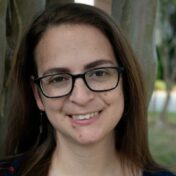
Sarah Marks is a physician-scientist in training pursuing a dual doctoral degree in medicine and health policy at Virginia Commonwealth University (VCU). Her research focuses on reducing health disparities and addressing the health needs of patients admitted into intensive care units (ICU), particularly those with substance use disorders.
Her pilot investigation will be the first to conduct a large-scale analysis on the efficacy of medications for opioid use disorder (MOUD) for ICU patients covered by Medicaid.
Critically ill Medicaid beneficiaries are more likely to have OUD than their non-ICU hospitalized counterparts, yet less likely to receive treatment. Hospitalization represents a crucial opportunity to link people with OUD to care, and referral for treatment or medication at discharge. However, there are significant gaps in our understanding of the best strategies to help improve outcomes in this population.
Findings from this study aim to inform state policy makers, researchers, and clinicians, who are seeking to better support Medicaid beneficiaries with OUD and other comorbidities. The CHERISH pilot grant will also support Marks’ methodological training in the use of target trial emulation with claims data.
She will receive support from Andrew Barnes, a professor of health policy at VCU; Theodore Iwashyna, a Bloomberg Distinguished Professor of Social Science and Justice in Medicine at Johns Hopkins University; and Paul Christine, an assistant professor of medicine at University of Colorado.
Read about the significance of her proposal, “Evaluating the Effectiveness of Medications for Opioid Use Disorder Among Critically Ill Medicaid Beneficiaries Using Target Trial Emulation.”
This article originally appeared on the CHERISH website.
- Highlights